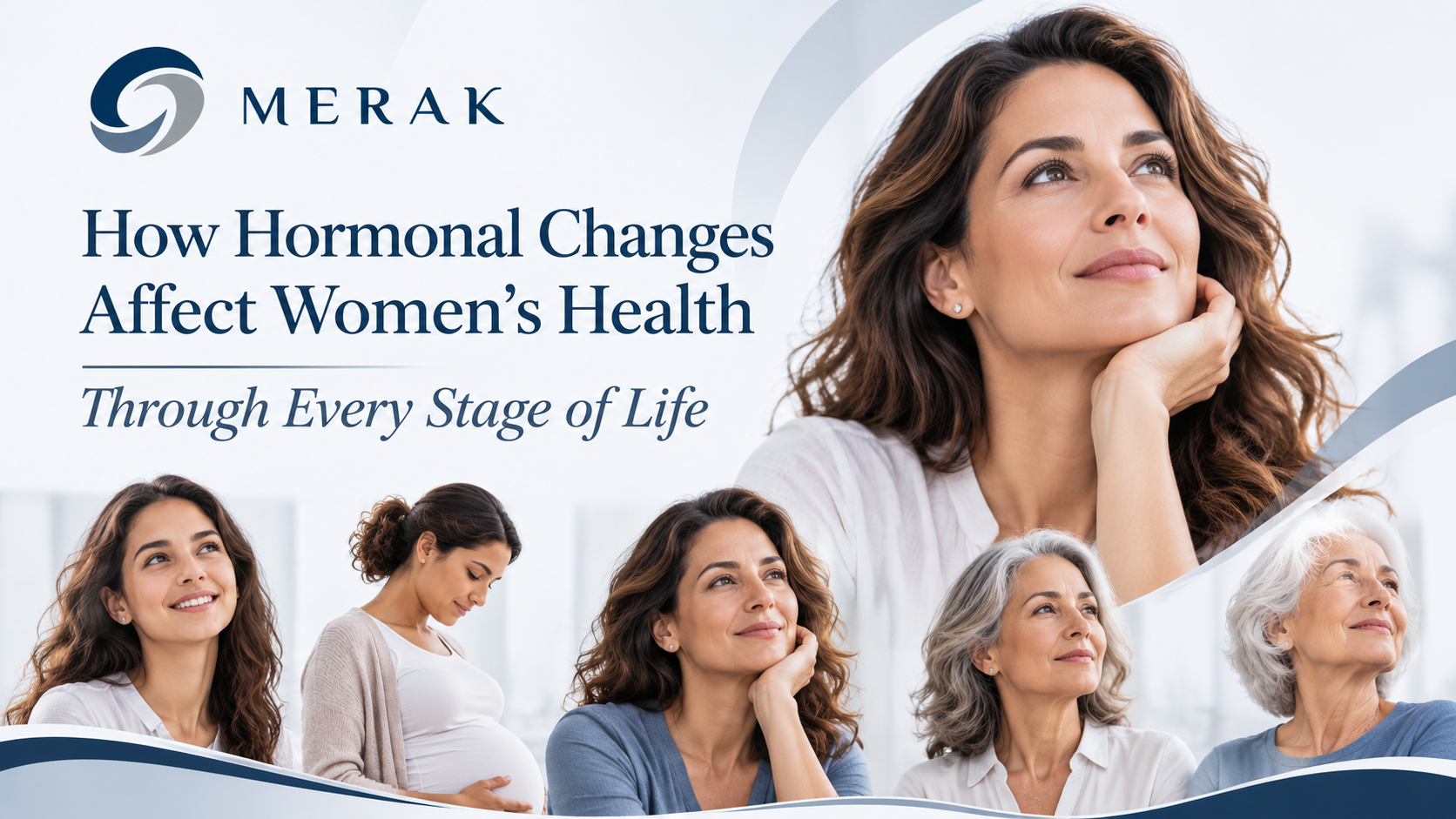
How Hormonal Changes Affect Women's Health Through Every Stage of Life
Hormones influence many aspects of a woman's health, from menstrual cycles and reproductive function to sleep, mood, skin, metabolism, and intimate wellness. These chemical messengers help coordinate essential processes throughout the body, and their levels naturally change during different stages of life.
For some women, these transitions are relatively subtle. Others notice changes in their energy, menstrual patterns, sleep quality, body composition, or intimate comfort that affect their everyday lives.
Understanding hormonal changes in women can make it easier to recognize what may be happening, identify when professional guidance is appropriate, and explore care options that align with individual health needs.
At Merak Skincare and Wellness Center, women's wellness services include bioidentical hormone replacement therapy (BHRT), anti-aging therapy, and medical weight management. With locations in Springfield and Fredericksburg, Virginia, Merak offers personalized wellness care for women navigating changes in their health and well-being.
Understanding Hormones and Women's Health
Hormones are chemical messengers produced by glands and tissues throughout the body. They travel through the bloodstream and influence how different organs function.
Several hormones play important roles in women's health, including:
Estrogen, which contributes to menstrual function, reproductive health, vaginal tissue health, and bone maintenance.
Progesterone, which helps regulate the menstrual cycle and supports pregnancy.
Testosterone, which contributes to sexual function, muscle health, and other physiological processes in women.
Thyroid hormones, which help regulate metabolism, body temperature, and energy use.
Insulin, which helps regulate blood glucose levels and influences how the body uses and stores energy.
Hormonal levels fluctuate naturally in response to menstrual cycles, pregnancy, aging, medications, and certain health conditions.
However, not every symptom experienced by a woman is caused by hormones. Fatigue, weight changes, mood disturbances, and sleep problems can have several possible explanations. Understanding the broader health picture is important before deciding which approach may be appropriate.
1. Hormonal Changes During the Reproductive Years
During the reproductive years, estrogen and progesterone fluctuate throughout the menstrual cycle. These changes help regulate ovulation, prepare the uterine lining, and coordinate menstruation.
Many women experience predictable cycles, while others notice symptoms that vary from month to month.
Common experiences during this stage
Hormonal fluctuations may be associated with:
Changes in menstrual flow and cycle length.
Breast tenderness before menstruation.
Bloating or fluid retention.
Menstrual cramps.
Changes in skin oil production or acne.
Temporary changes in mood, appetite, or energy.
The intensity of these experiences varies. Some changes are a normal part of the menstrual cycle, while persistent or disruptive symptoms may warrant further evaluation.
For example, unusually heavy bleeding, severe pelvic pain, or periods that become consistently irregular should not automatically be attributed to normal hormonal fluctuations.
A healthcare professional can assess symptoms in context and determine whether additional evaluation is needed.
2. Hormonal Changes During Pregnancy and Postpartum Recovery
Pregnancy brings substantial changes in estrogen, progesterone, and other hormones that support fetal development and prepare the body for childbirth.
After delivery, hormone levels shift again. These changes occur alongside physical recovery, interrupted sleep, changes in daily routines, and the demands of caring for a newborn.
How postpartum hormonal changes may affect women
Some women experience:
Temporary changes in mood.
Night sweats or increased perspiration.
Changes in skin pigmentation or acne.
Hair shedding in the months after delivery.
Vaginal dryness, particularly during breastfeeding.
Changes in sexual comfort and desire.
Changes in body composition.
These experiences do not necessarily indicate a hormonal disorder. Several can occur during normal postpartum recovery, but persistent or severe symptoms deserve attention.
Emotional changes also require careful consideration. Temporary mood changes after childbirth are different from postpartum depression or other mental health conditions. Feelings of hopelessness, persistent sadness, severe anxiety, or difficulty functioning should be discussed with a healthcare professional promptly.
Women experiencing postpartum skin changes may also explore Merak's Postpartum Facial and aesthetic services. These services address relevant skin concerns and should not be considered treatments for underlying hormonal imbalances.
3. Perimenopause: When Hormone Levels Begin to Fluctuate
Perimenopause is the transition leading up to menopause. It often begins during the 40s, although the timing varies among women.
During this period, ovarian hormone production changes, and estrogen levels may fluctuate considerably. Menstrual cycles can become less predictable, and symptoms may appear gradually.
For some women, perimenopause has little impact on daily life. For others, it can affect sleep, comfort, concentration, and overall well-being.
Common perimenopause symptoms
Women may notice:
Irregular menstrual cycles.
Hot flashes and night sweats.
Difficulty falling or staying asleep.
Mood changes or increased irritability.
Vaginal dryness or discomfort during intimacy.
Changes in sexual desire.
Changes in body composition.
Difficulty concentrating or episodes of forgetfulness.
These symptoms can overlap with other medical conditions, so it is important not to assume that every new concern is caused by perimenopause.
Tracking menstrual changes, sleep patterns, and symptoms can help make conversations with a healthcare professional more productive.
For additional information, the American College of Obstetricians and Gynecologists' guide to menopause explains what women may experience during this transition.
4. Menopause and Its Long-Term Effects on Women's Health
Menopause is defined as the point when a woman has gone 12 consecutive months without a menstrual period, provided another cause does not explain the absence of menstruation.
In the United States, menopause typically occurs around age 51, although individual experiences vary.
As ovarian estrogen production declines, women may experience changes that affect several aspects of their health.
Sleep and temperature regulation
Hot flashes and night sweats can interrupt sleep and leave women feeling tired during the day. Poor sleep may also affect concentration, mood, and everyday functioning.
Vaginal and intimate wellness
Lower estrogen levels can contribute to vaginal dryness, reduced tissue elasticity, discomfort during sexual activity, and certain urinary symptoms.
These concerns are common, but women do not need to accept persistent discomfort as an inevitable part of aging.
Merak offers Vaginal Restoration services for women interested in discussing intimate wellness concerns and potential treatment options.
The appropriate approach depends on the symptoms involved, medical history, and an individualized clinical assessment.
Bone health
Estrogen plays a role in maintaining bone density. Bone loss can accelerate during the years surrounding menopause, increasing the risk of osteoporosis in some women.
Adequate nutrition, appropriate weight-bearing exercise, and recommended bone-density screening can help support long-term bone health.
Cardiovascular health
Changes in cardiovascular risk factors can become more noticeable during midlife. Blood pressure, cholesterol levels, physical activity, smoking status, and other health considerations all contribute to a woman's overall cardiovascular risk.
Menopause does not automatically mean a woman will develop heart disease. However, it is a useful time to review preventive health needs and discuss appropriate screening.
The National Institute on Aging's menopause resource provides additional information about symptoms, health changes, and available management approaches.
5. How Hormonal Changes May Affect Skin and Hair
Changes in hormone levels can influence skin oil production, hydration, collagen maintenance, and hair growth patterns.
During different life stages, women may notice that their usual skincare routine no longer addresses their concerns as effectively as before.
Common skin and hair concerns
Hormonal transitions may coincide with:
Increased dryness or changes in skin texture.
New or recurring acne.
Changes in skin elasticity.
Increased visibility of fine lines.
Changes in hair density or shedding.
Pigmentation changes during pregnancy or other hormonal transitions.
However, these concerns are not always hormonal in origin. Genetics, sun exposure, medications, nutrition, stress, and underlying health conditions may also contribute.
A personalized skincare approach can help address visible changes without assuming that a cosmetic treatment will correct a hormonal problem.
Merak provides medical-grade skincare and aesthetic services for individualized skin concerns. The most appropriate option depends on the skin concern, treatment goals, and clinical suitability.
Treatments such as Morpheus8 are aesthetic options for selected skin concerns; they are not substitutes for evaluating or treating a hormonal condition.
6. Hormones, Metabolism, and Changes in Weight
Some women notice changes in body composition or find weight management more challenging during midlife.
Hormonal transitions may contribute to changes in fat distribution, particularly around the abdomen. However, weight changes are rarely explained by a single factor.
Age-related changes in muscle mass, physical activity, sleep, stress, dietary patterns, medications, and certain medical conditions can also influence weight.
Why an individualized approach matters
A sustainable weight-management plan may consider:
Eating patterns and nutritional needs.
Physical activity and strength training.
Sleep quality and stress management.
Relevant medications and medical conditions.
Changes in body composition over time.
Individual health goals and preferences.
Women should not assume that unexplained weight gain is simply a consequence of menopause. Depending on the circumstances, a healthcare professional may consider thyroid disorders, medication effects, sleep difficulties, or other possible contributors.
Merak offers Medical Weight Loss and physician-directed weight management in Springfield and Fredericksburg, Virginia.
The goal is to understand individual needs and discuss appropriate options rather than relying on a one-size-fits-all approach.
7. Understanding Bioidentical Hormone Replacement Therapy
For some women, hormonal symptoms become disruptive enough to warrant a discussion about treatment.
Bioidentical hormone replacement therapy, commonly called BHRT, is one of the services offered through Merak's Wellness program.
The term "bioidentical" refers to hormones that have the same molecular structure as hormones produced by the human body. Products described this way are not all the same: some are FDA-approved medications, while others are compounded preparations.
It is important to understand this distinction when considering treatment.
Is hormone therapy appropriate for every woman?
No. Hormone therapy is not necessary for every woman experiencing hormonal changes, and it is not suitable for everyone.
Potential benefits and risks depend on factors such as:
The symptoms being treated.
Age and stage of menopause.
Personal and family medical history.
The type, dose, and route of hormone therapy.
Relevant cardiovascular, cancer, and blood-clot risks.
Whether the woman has a uterus.
The American College of Obstetricians and Gynecologists recommends FDA-approved hormone therapy over compounded bioidentical hormone preparations because compounded products have not demonstrated superior safety or effectiveness.
Women considering hormone therapy should discuss available options, potential risks, expected benefits, and alternatives with a qualified healthcare professional.
Treatment decisions should be individualized rather than based solely on age, a single hormone test, or symptoms viewed in isolation.
8. When Should You Seek Professional Guidance?
Hormonal changes are a natural part of life, but some symptoms deserve further evaluation rather than being dismissed as normal aging.
Consider arranging an appointment if you experience:
Menstrual bleeding that becomes unusually heavy or persistent.
Severe pelvic pain or pain that interferes with daily activities.
Hot flashes or sleep disruption that significantly affect quality of life.
Persistent vaginal dryness or painful intimacy.
Unexplained weight changes accompanied by other symptoms.
Ongoing fatigue, mood changes, or difficulty concentrating.
New or concerning changes in your menstrual cycle.
Any bleeding after menopause should be evaluated by a healthcare professional.
Seek urgent medical attention for severe symptoms, including chest pain, difficulty breathing, sudden weakness, or heavy bleeding accompanied by dizziness or fainting.
An appropriate assessment may involve reviewing symptoms, medical history, medications, menstrual patterns, and relevant examinations or testing. Not every woman needs extensive hormone testing; the evaluation should be guided by the clinical situation.
9. Personalized Women's Wellness at Merak Skincare and Wellness Center
Women's wellness is not a single treatment or a fixed plan. The concerns a woman experiences during her reproductive years may differ considerably from those she experiences during perimenopause or after menopause.
At Merak Skincare and Wellness Center, available services include bioidentical hormone replacement therapy, anti-aging therapy, and medical weight management. The practice also offers aesthetic and intimate wellness services for selected concerns.
Depending on individual needs, a consultation may help determine whether a wellness service is appropriate, whether another type of evaluation is needed, or whether a different approach would be more suitable.
Women experiencing vaginal dryness, discomfort during intimacy, or pelvic health concerns can also explore Merak's Vaginal Restoration and Pelvic Floor Restoration service information.
These services address different concerns and should not be treated as interchangeable or as universal solutions for hormonal symptoms.
Merak serves women in Springfield and Fredericksburg, Virginia, with care directed by Dr. Pushpinder Dhillon, MD, MS, FACOG.
The emphasis is on understanding each woman's concerns, discussing appropriate options, and supporting informed decisions throughout different stages of life.
Frequently Asked Questions
1. At what age do hormonal changes begin in women?
Hormonal changes occur throughout life, beginning with puberty and continuing through the reproductive years, pregnancy, perimenopause, and menopause. The timing and intensity of these changes differ from one woman to another.
2. What are the common signs of hormonal changes in women?
Possible signs include menstrual irregularities, hot flashes, night sweats, sleep disturbances, vaginal dryness, changes in mood, and changes in body composition. These symptoms can also have other causes, so persistent or concerning changes should be evaluated.
3. Can hormonal changes affect weight?
Hormonal changes may influence fat distribution and body composition, particularly around menopause. However, weight is also affected by muscle mass, nutrition, activity, sleep, medications, and other health conditions.
4. Does every woman need hormone replacement therapy during menopause?
No. Some women manage menopause symptoms without hormone therapy, while others may benefit from discussing treatment options. The decision depends on symptoms, medical history, individual risk factors, and personal preferences.
5. What is bioidentical hormone replacement therapy?
Bioidentical hormone replacement therapy uses hormones with the same molecular structure as hormones produced by the body. Products vary, and bioidentical hormones may be FDA-approved or compounded. Their benefits and risks should be discussed with a qualified healthcare professional.
6. Can menopause cause vaginal dryness?
Yes. Lower estrogen levels during and after menopause can contribute to vaginal dryness, reduced tissue elasticity, and discomfort during intimacy. Several management options exist, and the appropriate approach depends on individual symptoms and medical history.
7. Where can women find wellness services in Springfield and Fredericksburg, VA?
Merak Skincare and Wellness Center offers wellness services, including BHRT and medical weight management, at its Springfield and Fredericksburg, Virginia, locations. Women can explore the available services and schedule a consultation through the official website.
Conclusion: Understanding Your Body Through Every Stage of Life
Hormonal changes are a natural part of women's health, but the way they affect daily life is highly individual. From menstrual changes and postpartum recovery to perimenopause and menopause, understanding your symptoms can help you make informed decisions about your well-being.
Persistent symptoms should not automatically be attributed to hormones or aging. A thoughtful evaluation can help clarify potential causes and identify appropriate next steps.
At Merak Skincare and Wellness Center, women in Springfield and Fredericksburg, VA, can explore personalized wellness options, including BHRT and medical weight management, based on their individual needs.
Explore Merak's wellness services to learn more about available options and determine whether a consultation may be appropriate for your goals.